How Retailers Can Win Customers When the Buyer Isn't Human
By Pini Yakuel, CEO, Optimove
Retailers are faced with a new question: How do you build a relationship with a customer when the buyer isn't human?
I was talking recently with one of our executives when she mentioned she'd been looking for theater tickets. She didn't browse ticketing sites or scroll through reviews. She asked an AI assistant, which searched shows, dates and seats and laid out her best options. She hasn't let it buy the tickets yet, but she said that's probably next. It turns out she now uses AI the same way for other shopping.
She's far from alone. Our own 2026 Optimove research, a survey of more than 600 consumers, found that 72% of U.S. shoppers now use AI tools such as ChatGPT, Claude or Gemini for shopping ideas or gift recommendations, and nearly half do so regularly. A new McKinsey survey revealed that more than half of shoppers now use AI to shop, corroborating what we found.
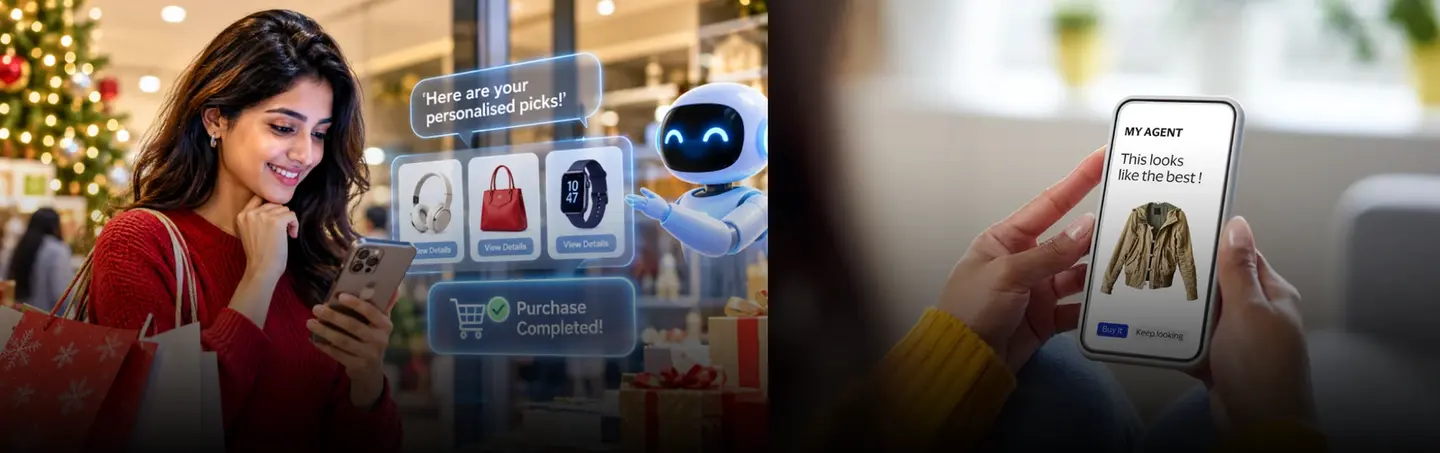
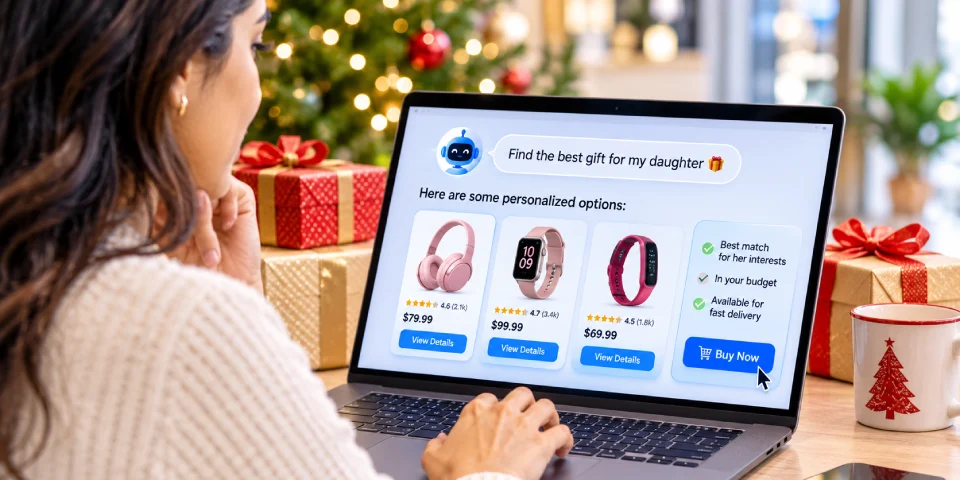
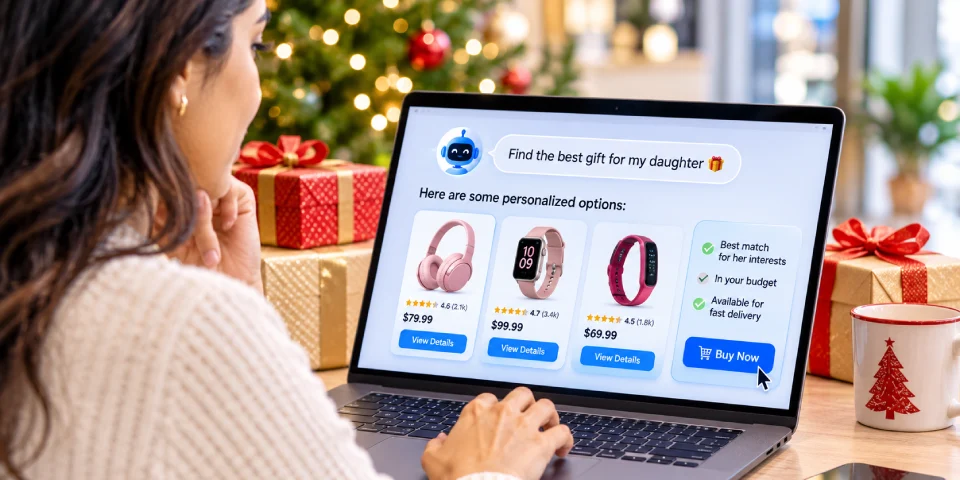
Increasingly, AI isn't just helping people decide what to buy. It's starting to do the buying. In the U.S., the share of AI users who completed a purchase directly through an AI tool rose from 10% to 17% in one year, according to McKinsey. This holiday season, AI agents will place orders on behalf of millions of shoppers.
The agent gets your catalog. You keep the relationship. That relationship is what gives a customer a reason to choose you again.
— Pini Yakuel, CEO, Optimove


Katelyn Daniell is an innovative leader in the digital and retail sectors. She’s co-founder of Precision Retail, an AI-powered survey tool for capturing zero-party data, and mplus, a tech stack solution for optimizing digital advertising.
Katelyn is passionate about building retailer-customer relationships through sustainable value exchanges and zero-party data. This venture is already making waves in the industry by enabling retailers to engage with their customers in more meaningful and impactful ways.
Since December 2021, Katelyn has also been the co-founder of mplus, where she has played a crucial role in the company's growth and success. Her leadership has been instrumental in establishing mplus as a key player in the digital adtech market.
Prior to her entrepreneurial endeavors, Katelyn served as the Chief Commercial Officer at MCap Group from August 2019 to July 2020. She has extensive experience at Dentsu Aegis Network where, over five and a half years, she held various positions, including Commercial Director, Digital Investment Manager, Digital Investment Supervisor, and Digital Strategist. Her responsibilities included managing revenue diversification, adopting new commercial models, overseeing media and ad tech supply-side management, and leading digital investment for major retail and CPG brands.
For two decades, marketing followed a predictable sequence: search, ad, site visit, browse, compare, buy. Every step was a chance to make an impression.
AI compresses that sequence into a single request. According to McKinsey, 81% of AI users say AI does a good job narrowing their choices. In my opinion, AI is becoming everyone's new friend, and an increasingly influential source in their purchase decisions.
The agent doesn't see your ads or remember your brand. That means many shoppers will meet your brand for the first time after the purchase has already happened.
The Post-Purchase Moment Matters Most
The Path to Purchase Has Collapsed
The holidays are when brands meet the most new customers. Our data covering more than 5.5 million customers shows new customers jumped 593% on Black Friday 2025 compared with an average day, and 404% on Cyber Monday. And 47% of shoppers say they plan to try new brands this season.
As more of those first purchases are made by an AI agent, the brand's first real conversation with that customer won't be an ad or a homepage. It will be the order confirmation, the welcome email and the first product recommendation. Each one has to feel personal.
Recognize the Customer, Not Just the Order
Retailers need to seize the moment. That means connecting every signal, including a purchase an agent made, to a real person with a history, preferences and a likely next need.
A shopper who has bought running shoes three times might be back to restock, or to browse outdoor jackets for the first time. Those are two different moments that need two different responses.
At holiday scale, no team can manage this by hand. It takes real-time data and AI decisioning to choose the right message, offer, channel and timing for each customer.
Protect Your Relationship Data
Key Takeaways
Our recommendation in working with retailers is to make product information, pricing and inventory widely available so agents can recommend and transact. But treat customer information, purchase history and loyalty data as assets that need greater protection.
Put simply: The agent gets your catalog. You keep the relationship. That relationship is what gives a customer a reason to tell their agent to choose you next time.
Agentic commerce is still early. Agentic checkout remains a small share of total sales, and OpenAI reportedly scaled back its instant checkout plans this year. But retailers who prepare now will shape the shift rather than react to it. Agents follow instructions, and the brands that win repeat business will be the ones customers name.
In the end, retailers need to ensure the relationship is with the human, not the agent.